Editorial Team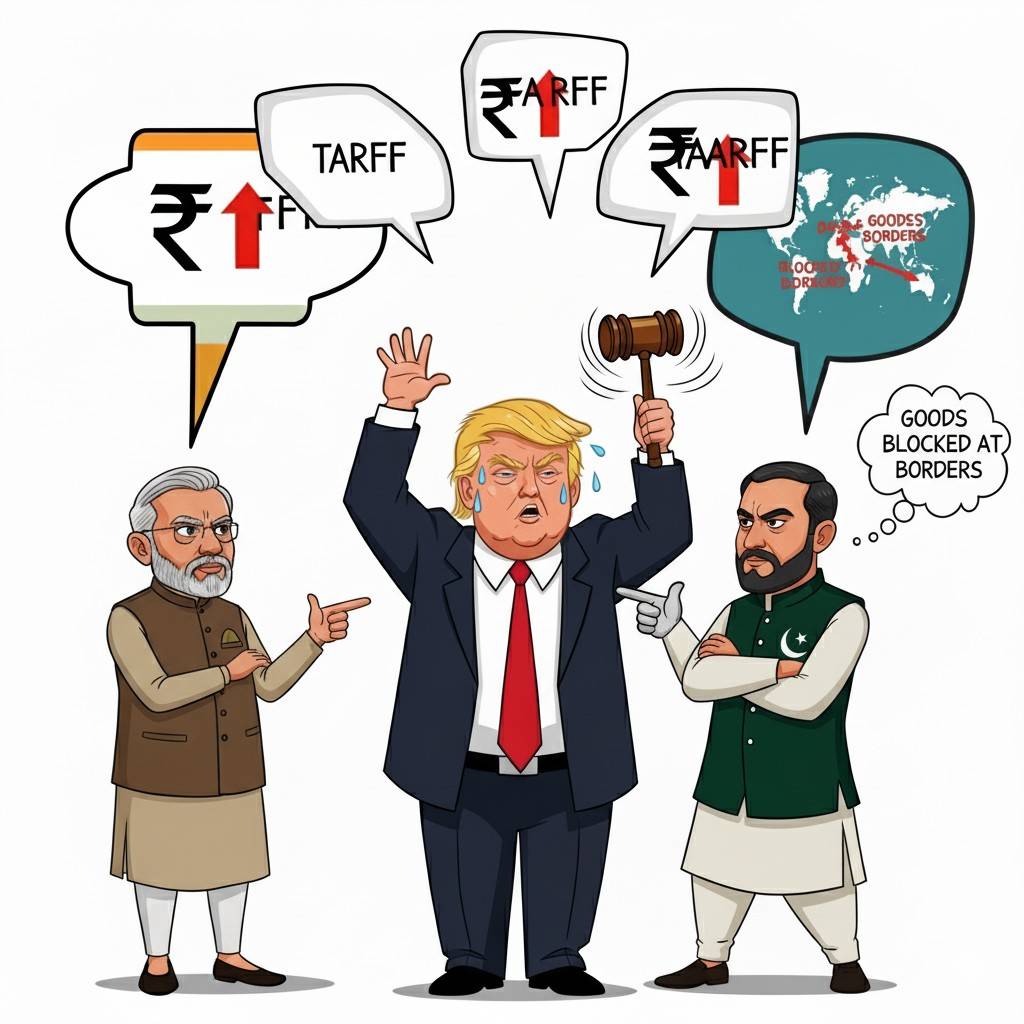
According to a report by the American multinational investment bank and financial services business Jefferies, President Donald Trump was not permitted to resolve the India-Pakistan issue, which is why the United States imposed heavy tariffs of 50% on India.
Trump apparently planned to intercede in the May clash between the two South Asian nuclear powers, and the source said that such hefty and unprecedented tariffs were a “consequence” of his “personal pique.”
“Tariffs are primarily the consequence of the American president’s personal pique that he was not allowed to play a role in seeking to end the long-running acrimony between India and Pakistan,” the report stated.
India has stated time and time again that it opposes foreign involvement in disputes with Pakistan.
The White House asserts that Trump should receive the Nobel Peace Prize for his repeated claims to have resolved numerous international disputes, notably the one between India and Pakistan.
In July, White House Press Secretary Karoline Leavitt stated, “It’s long overdue that President Trump received the Nobel Peace Prize.”
His article on Truth Social earlier this year stated, “I will work with you both to see if, after a thousand years, a solution can be arrived at, concerning Kashmir.” India was offended by the mediation offer.
Despite facing the prospect of heavy economic costs, India held on to its “red line” of no third-party intervention.
Another point that the report stated drove home the tariffs was agriculture. It highlighted that no Indian government has agreed to open up the agriculture sector to imports in order to protect its farmers.
Agriculture provides a living for almost 250 million farmers and laborers. In India, the agricultural sector employs 40% of the labor force.
Earlier this month, US Treasury Secretary Scott Bessent said that India has been “bit recalcitrant” in trade talks with the US.
India had responded to the tariffs by claiming that it was “unjustified and unreasonable” that they were targeting the country.
Pushing India runs the risk of putting it closer to China, the Jefferies research cautioned. In September, direct flights between the two nations will also restart after a five-year break.


 Akki Yadav