Akki Yadav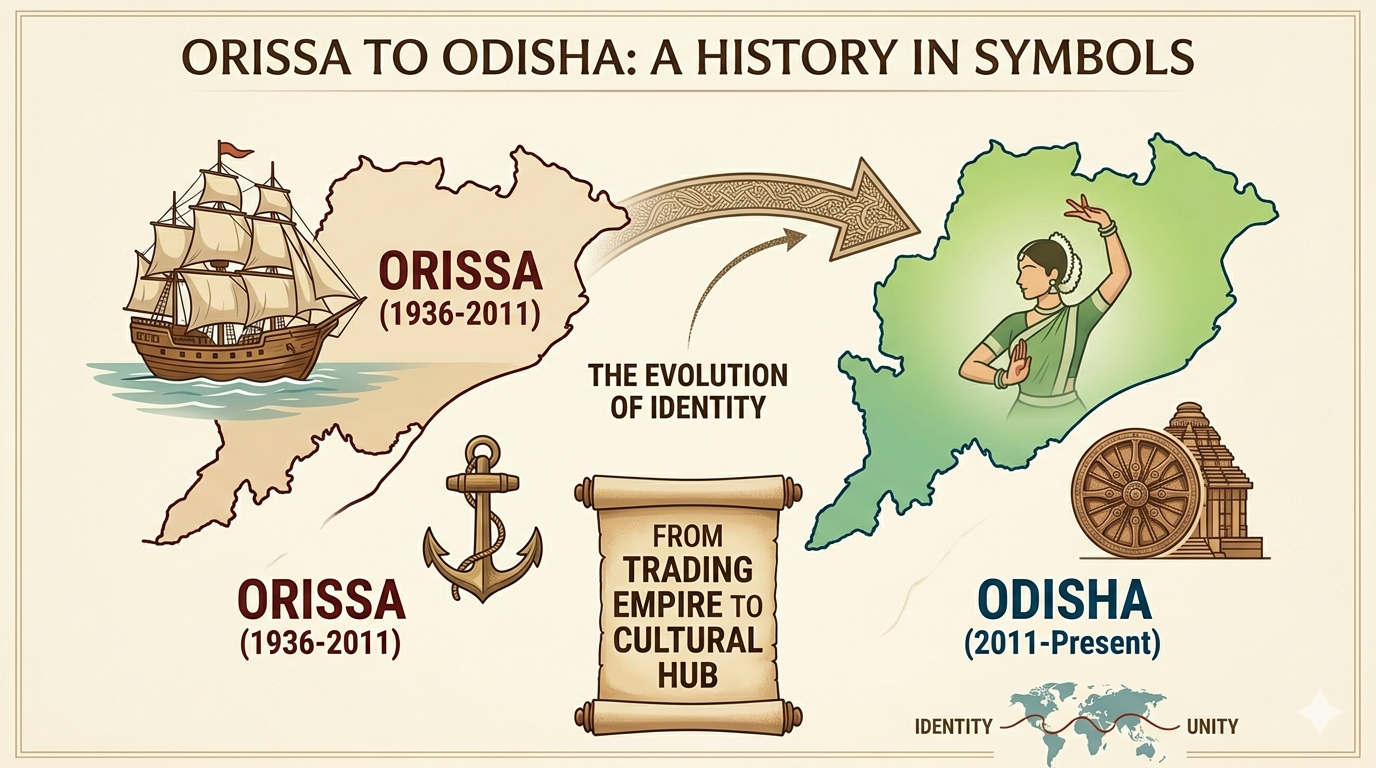
Odisha vs Orissa represents more than a spelling shift—it’s a reclaiming of cultural and linguistic identity for India’s eastern state. The transition from “Orissa” to “Odisha,” formalized in 2011, addressed long-standing demands to align the official name with native Odia pronunciation and historical roots.
Historical Origins
Odisha vs Orissa debate traces back to ancient “Odra” tribes, giving the region its name as the “Land of the Odra People.” Known historically as Kalinga or Utkala, references to “Odras” appear in Greek texts like Pliny’s, tied to sites like Malayagiri mountain. “Orissa” emerged as a colonial anglicization, straying from the Odia “Odisha,” which fueled demands for phonetic accuracy.
Reasons for the Change
Odisha vs Orissa push gained momentum in the 2000s from civil society, cultural groups, and leaders arguing “Orissa” distorted heritage. The Odisha Assembly passed a 2008 resolution, leading to 2010-2011 parliamentary bills and the Orissa (Alteration of Name) Act, 2011, amending the Constitution’s First Schedule. Motivations focused on separating the state name from the language (Oriya to Odia) and correcting colonial-era impositions.
Legislative Process
In June 2008, Odisha’s government proposed the change, with assembly approval by August. Parliament enacted the Constitution (113th Amendment) Bill in March 2011, passing both Lok Sabha and Rajya Sabha with cross-party backing as a historic step. President Pratibha Patil assented later that year, making it effective November 2011.
Impact Today
Odisha vs Orissa resolution now symbolizes pride in Odissi dance, festivals, and tribal legacies under the “Odisha” banner. Official use across documents, maps, and media boosts SEO, tourism, and global recognition—vital for content creators on Indian topics. With no major disruptions, it strengthens linguistic purity and regional branding into 2026.