Editorial Team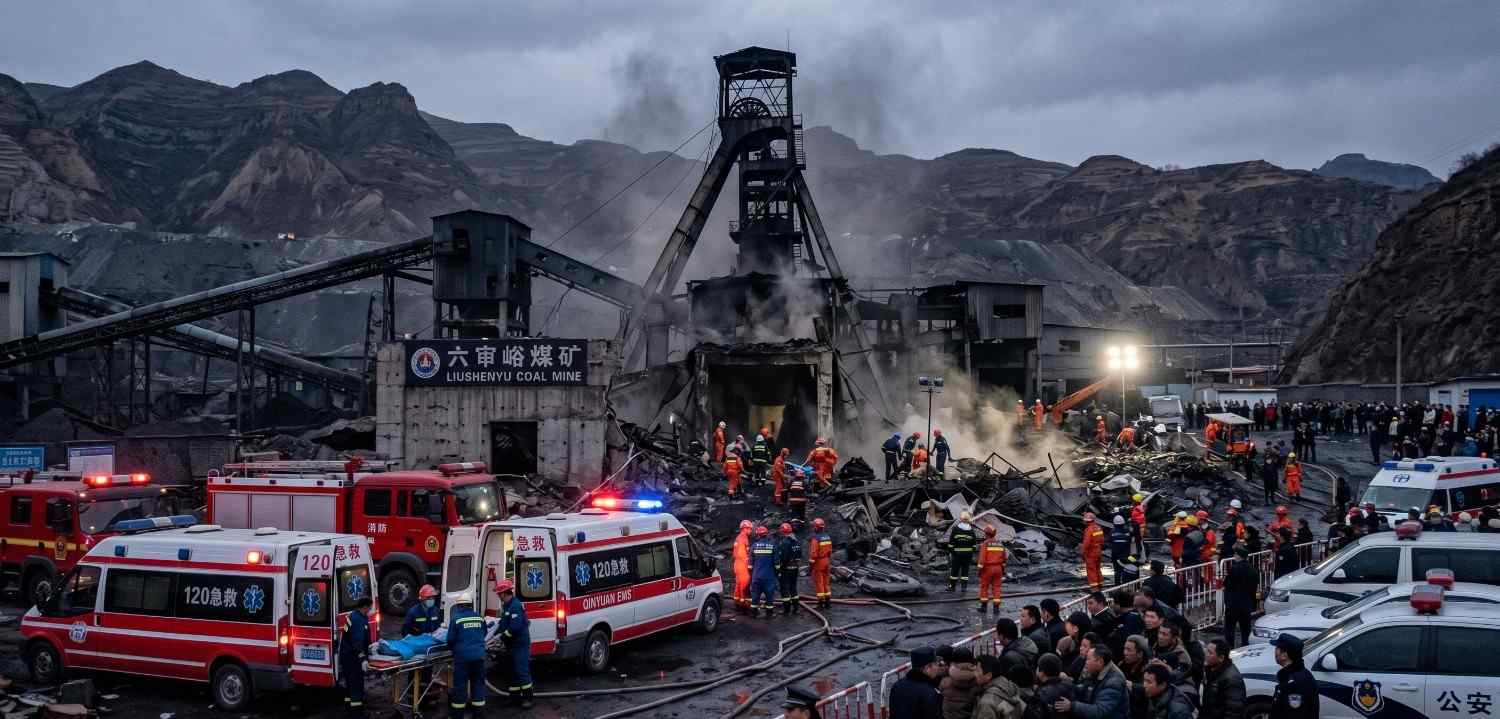
TAIYUAN, China — A massive underground gas explosion at the Liushenyu coal mine in Qinyuan County, Shanxi province, has killed at least 90 people and left nine others missing. The blast, which occurred at 7:29 PM local time on Friday, marks China’s deadliest mining catastrophe since a 2009 explosion in Heilongjiang province claimed 108 lives.
The Incident and Immediate Fallout
At the time of the blast, 247 miners were working underground. According to the local emergency management bureau and state broadcaster CCTV, a carbon monoxide alert was triggered just before the explosion, signaling that toxic, odorless gas levels had dramatically exceeded safe limits.
The death toll spiked sharply overnight as emergency crews pushed deeper into the damaged shafts. While the vast majority of the workers have been brought to the surface, the blast left a wake of widespread casualties:
- Fatalities: At least 90 miners confirmed dead.
- Missing: 9 workers remain unaccounted for deep within the mine.
- Hospitalized: More than 120 individuals are receiving medical treatment, with state media reporting that a massive influx of victims suffered from acute toxic gas inhalation. At least four miners remain in serious or critical condition.
Massive Rescue Operations Underway
A massive mobilization effort is currently active at the site. A total of 755 rescue and medical personnel have been deployed to Qinyuan County to locate the missing and treat survivors. Aerial footage and state media photographs from the scene show rows of ambulances and rescue vehicles surrounding the facility as helmeted emergency workers carry stretchers from the mine entrance.
Safety Warnings Ignored
The disaster has cast a harsh light on the mine’s history and structural risks. The Liushenyu facility, operated by the Shanxi Tongzhou Coal & Coke Group, has an annual production capacity of 1.2 million tons.
Crucially, China’s National Mine Safety Administration had officially designated the facility on a national watchlist of disaster-prone mines due to its documented “high gas content.” Despite this high-risk classification, operations continued up until Friday’s catastrophic failure.
In response to the tragedy, local authorities confirmed that executives and personnel responsible for overseeing the mine have been detained and “placed under control” in accordance with the law as a formal investigation begins.
Political Reaction and Context
Chinese President Xi Jinping issued urgent directives for an all-out rescue effort, demanding strict legal accountability for those responsible.
“All regions and departments must draw lessons from this accident, remain constantly vigilant regarding workplace safety… and resolutely prevent and curb the occurrence of major and catastrophic accidents,” Xi stated.
Premier Li Qiang similarly ordered the State Council’s workplace safety office to launch immediate industrial safety reviews nationwide. The political urgency is heightened by seasonal risks; President Xi noted that as China enters its heavy rainy and flood season, industrial operations face heightened dangers from water ingress and structural instability.
A History of Mining Risks
While China has drastically reduced its overall coal mining fatalities over the past two decades by shutting down small, illegal operations and tightening safety frameworks, the country remains heavily reliant on the fossil fuel.
| Region Context: Shanxi Province | |
| Population | ~34 million residents |
| National Output | 1.3 billion tons extracted last year |
| Share of Production | Supplies nearly one-third of China’s total coal |
The immense economic pressure to maintain high output levels to fuel the nation’s grid frequently collides with safety enforcement, leaving miners in high-gas environments like the Liushenyu facility highly vulnerable.