Akki Yadav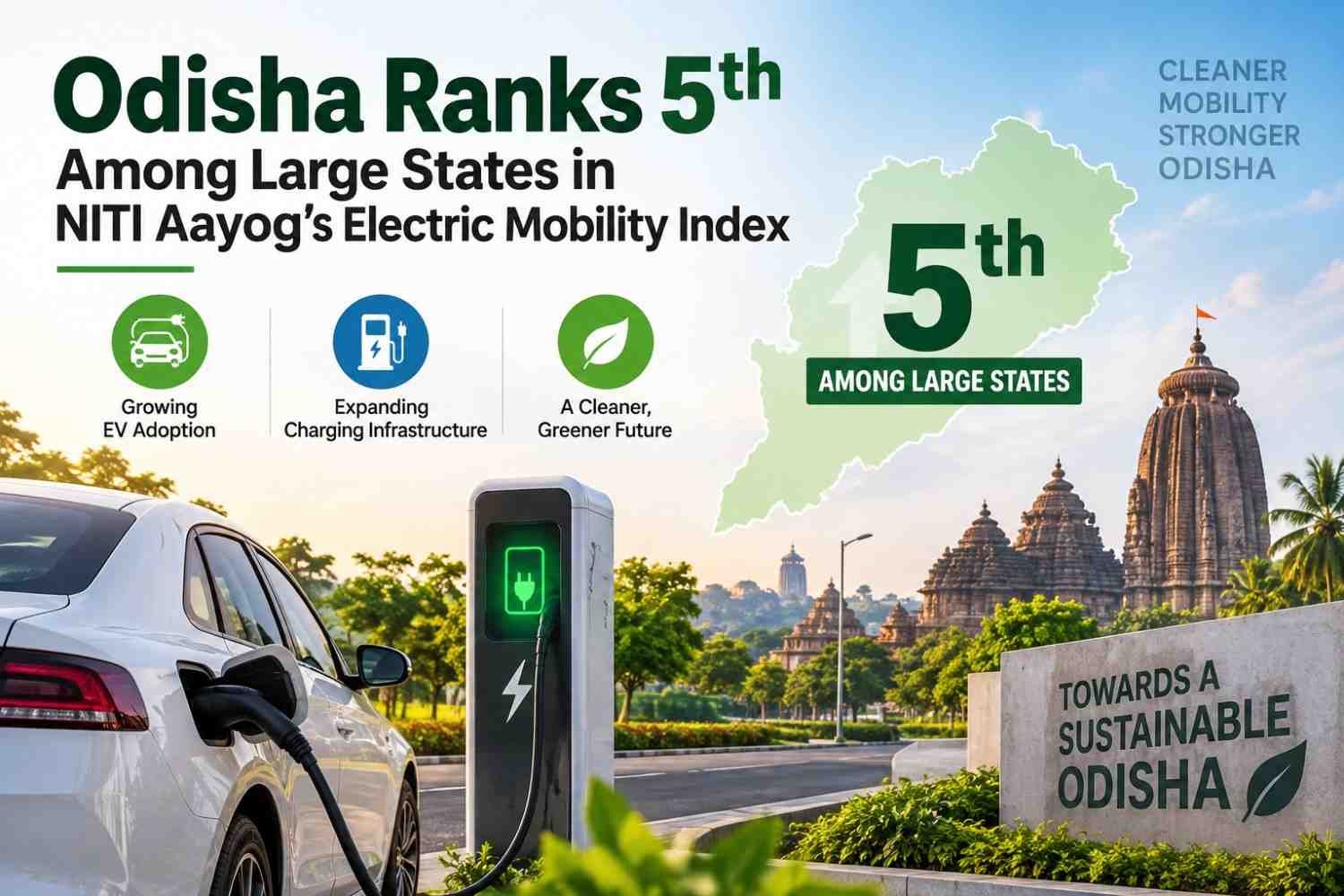
BHUBANESWAR — Odisha has secured the fifth position among large states in the second edition of the India Electric Mobility Index (IEMI) 2025, jointly developed and published by NITI Aayog and WRI India.
The state increased its composite score from 49 in the baseline edition to 55 out of 100, placing it in the “Frontrunner” tier (states scoring between 50 and 64). However, in the pan-India ranking across all 36 states and Union Territories, Odisha slipped slightly from 7th to 8th position as other regions—notably Madhya Pradesh and Goa—registered steeper improvements. Nationally, Delhi topped the index with 84 points, followed by Maharashtra (78), Karnataka (73), Chandigarh (71), and Goa (65).
The index evaluates clean transit preparedness across three weighted pillars:
- Transport Electrification Progress (50% weight): Odisha scored strongly in private EV uptake, backed by its dedicated state EV policy and purchase incentives. However, it registered lower progress in commercial fleet electrification and retrofit conversions.
- Charging Infrastructure Readiness (30% weight): Marking its most notable improvement, Odisha gained ground by offering capital subsidies for charging stations, amending building bye-laws for EV-ready premises, and maintaining a stable power supply.
- EV Research, Innovation & Startups (20% weight): This remains the state’s primary bottleneck. The report noted Odisha trails significantly behind innovation leaders such as Karnataka, Maharashtra, and Delhi, recording only nine EV startups and 0.2 EV-related patents per trillion rupees of Gross State Domestic Product (GSDP).
NITI Aayog highlighted Odisha’s initiative of providing interest-free salary advances for government employees purchasing electric vehicles as an effective sub-national model practice.
To bridge remaining gaps, the report recommended setting up dedicated clean-mobility R&D centers, rolling out single-window clearances for charging infrastructure deployment, instituting lower electricity tariffs for commercial charging operators, and establishing low-emission zones with reserved EV parking.