Akki Yadav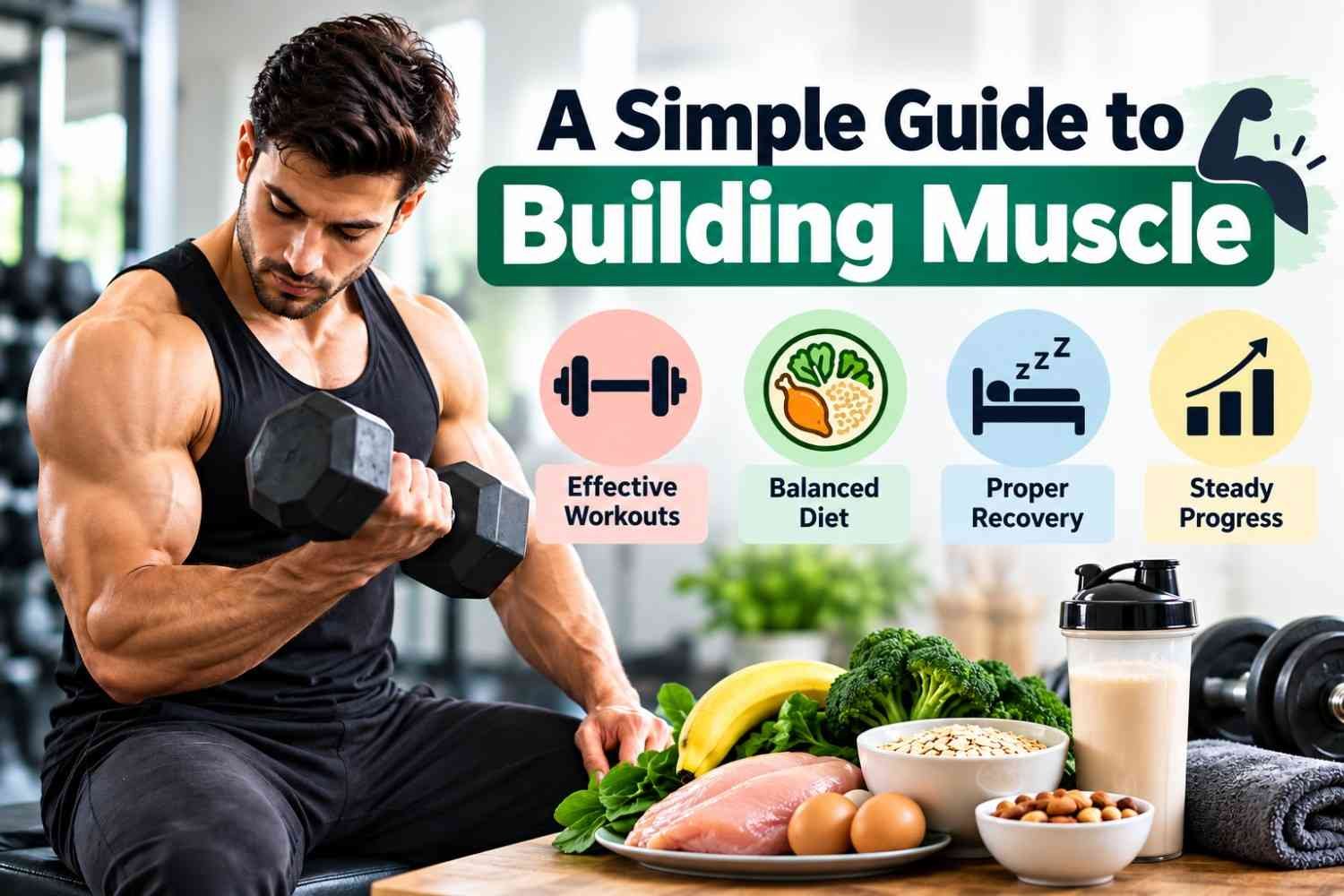
Building muscle is a great way to become stronger, improve fitness, support good posture, and keep your body active. Whether you want stronger arms, broader shoulders, stronger legs, or simply a healthier body, muscle-building requires more than just going to the gym.
A good workout routine, nutritious food, enough sleep, and regular training all work together to help you gain muscle.
If you are searching for wellhealth how to build muscle tag, this guide explains muscle growth in simple terms. It covers workouts, diet, recovery, supplements, common mistakes, and useful tips for beginners.
WellHealth How to Build Muscle Tag – What Does It Mean?
The term wellhealth how to build muscle tag is generally used by people searching for information about gaining muscle, becoming stronger, and improving their fitness routine.
The basics of muscle building can be divided into three important areas:
- Strength training
- A balanced, protein-rich diet
- Proper rest and recovery
You need all three to make steady progress. Working out without eating properly or sleeping enough can make muscle growth more difficult.
How Do Muscles Grow?
Muscle growth is also known as muscle hypertrophy. When you perform resistance exercises, your muscles are placed under stress. Your body then repairs and adapts to that stress during recovery.
Over time, regular training and proper nutrition can help your muscles become stronger and larger.
Muscle development can involve many areas of the body, including:
- Chest
- Back
- Legs
- Biceps
- Triceps
- Shoulders
- Hamstrings
- Calves
- Core
The goal should not be only to make your muscles bigger. Strong muscles also help with everyday activities, balance, movement, and joint support.
Best Exercises for Building Muscle
Resistance training is the main type of exercise used to build muscle. Beginners can start with bodyweight exercises and gradually add weights as they become more comfortable.
Compound Exercises
Compound exercises work several muscle groups at the same time.
Some popular examples include:
- Squats
- Deadlifts
- Bench presses
- Pull-ups
- Rows
- Overhead presses
- Lunges
These exercises can help develop overall strength and make your workouts more efficient.
Isolation Exercises
Isolation exercises mainly focus on one muscle or muscle group.
Examples include:
- Bicep curls
- Tricep extensions
- Leg curls
- Calf raises
- Lateral raises
You can combine compound and isolation exercises depending on your fitness level and goals.
A Simple Beginner Workout Plan
If you are just starting, you don’t need an extremely complicated routine.
One possible weekly structure is:
Day 1: Chest and triceps
Day 2: Back and biceps
Day 3: Rest
Day 4: Legs and core
Day 5: Shoulders and arms
Day 6: Light cardio or active recovery
Day 7: Rest
This is only an example. Your training schedule should match your fitness level, recovery ability, and personal goals.
Eat Enough Protein
Protein is an important part of muscle growth because it provides amino acids that the body uses to repair and maintain muscle tissue.
Good protein sources include:
- Eggs
- Chicken
- Fish
- Milk
- Greek yogurt
- Paneer
- Lentils
- Beans
- Soy and tofu
- Whey protein
You don’t have to depend on supplements to get protein. A balanced diet can provide plenty of protein for many people.
Don’t Forget Carbohydrates
Carbohydrates provide energy for exercise. Eating enough carbohydrates can help you perform better during challenging workouts.
Healthy options include:
- Rice
- Oats
- Potatoes
- Fruits
- Whole grains
- Whole-wheat roti
Your individual carbohydrate needs depend on your activity level and overall diet.
Include Healthy Fats
Healthy fats are also part of a balanced diet and support normal body functions.
Good sources include:
- Nuts
- Seeds
- Peanut butter
- Avocado
- Olive oil
The goal is to maintain a balanced diet rather than focusing on one particular food group.
Stay Hydrated
Water is easy to overlook, but hydration is important for normal body function and exercise performance.
Drink enough fluids throughout the day, especially when you exercise or sweat heavily.
Simple Muscle-Building Meal Plan
There is no single diet that works for everyone, but a simple day of meals could look like this:
Breakfast
- Oats with milk
- Banana
- Eggs
Mid-morning snack
- Fruit
- A small serving of nuts
Lunch
- Rice or roti
- Chicken, paneer, fish, or dal
- Vegetables
Pre-workout
- Banana
- Peanut butter
Post-workout
- Yogurt, milk, or a protein-rich meal
Dinner
- Fish, paneer, chicken, or dal
- Vegetables or salad
- Chapati or rice
Your food choices should be adjusted according to your dietary preferences, calorie needs, and fitness goals.
What Is Progressive Overload?
One of the most important ideas in muscle building is progressive overload.
It means gradually making your workouts more challenging as your body becomes stronger.
You can do this by:
- Increasing the weight
- Doing more repetitions
- Adding another set
- Improving your exercise technique
- Increasing training volume
For example, if you can comfortably perform 10 repetitions with a particular weight, you may eventually increase the resistance when your technique is good.
You don’t need to increase the weight every workout. Progress should be gradual and controlled.
Why Recovery Is Important
Training is only one part of building muscle. Your body also needs time to recover.
During recovery, your body repairs the muscle tissue stressed during exercise.
Get Enough Sleep
Most adults should aim for around 7–9 hours of sleep each night. Good sleep supports recovery, energy, and exercise performance.
Take Rest Days
You don’t need to train intensely every day. Rest days allow your body to recover.
Depending on your training program, one or more rest or lighter-activity days each week may be useful.
Manage Stress
High levels of ongoing stress can affect sleep, energy, and your ability to maintain a consistent workout routine. Finding ways to relax and manage stress can support your overall fitness routine.
Muscle Soreness After Exercise
It is common to experience muscle soreness after trying a new exercise or increasing your training. This is often called delayed-onset muscle soreness (DOMS).
You may notice soreness in areas such as:
- Legs
- Back
- Shoulders
- Hamstrings
- Biceps
Gentle movement, adequate fluids, nutritious meals, and sufficient sleep may help you feel better while your muscles recover.
However, severe pain, swelling, weakness, or pain that does not improve should not simply be ignored. Consider getting medical advice when symptoms are concerning or persistent.
Protect Your Joints With Strong Muscles
Muscles also help support and stabilize your joints.
For example, the muscles around the knee, including the quadriceps and hamstrings, contribute to knee stability. Calf and lower-leg muscles help with ankle movement and balance.
Strengthening the muscles around your shoulders, hips, knees, and ankles can support better movement when combined with proper technique.
However, strength training does not guarantee that injuries or joint pain will be prevented. Correct exercise technique and appropriate training loads are important.
Do You Need Supplements to Build Muscle?
Supplements are optional. You can build muscle without taking supplements if your training and diet are appropriate.
Some commonly used supplements include:
- Whey protein
- Creatine monohydrate
- Omega-3 supplements
- Multivitamins
Whey protein can be a convenient way to increase protein intake, while creatine is one of the more widely researched sports supplements.
However, supplements should not replace a balanced diet. If you take medications, have a medical condition, or are unsure whether a supplement is suitable for you, speak with a healthcare professional.
Common Muscle-Building Mistakes
Some simple habits can slow your progress.
1. Changing Your Workout Too Often
If you constantly change exercises, it becomes harder to track your progress.
2. Not Eating Enough
Your body needs adequate nutrition to support training and recovery.
3. Not Getting Enough Protein
A diet that consistently lacks protein may make it harder to support muscle repair.
4. Ignoring Sleep
Poor sleep can affect recovery and workout performance.
5. Using Poor Form
Lifting heavier weights with poor technique is not a good substitute for controlled, well-performed exercises.
6. Expecting Quick Results
Muscle growth takes time. Consistency is more important than trying to make dramatic changes in a few weeks.
7. Doing Too Much Cardio
Cardio can be useful for overall health, but excessive training without enough food and recovery can make it harder for some people to gain weight and muscle.
How Long Does It Take to Build Muscle?
There is no exact timeline because everyone responds differently to training.
Progress can depend on:
- Age
- Genetics
- Training experience
- Diet
- Sleep
- Training consistency
- Starting body composition
Beginners may notice improvements in strength within the first several weeks. Visible changes in muscle size generally take longer and require consistent training and nutrition.
Instead of focusing only on the mirror, track your strength, repetitions, body measurements, and workout performance over time.
WellHealth How to Build Muscle Tag – Tips for Beginners
If you’re completely new to strength training, keep things simple.
- Start with basic exercises.
- Learn proper form before lifting heavy.
- Begin with manageable weights.
- Train consistently.
- Eat a balanced diet.
- Include enough protein.
- Drink enough water.
- Get adequate sleep.
- Give your body time to recover.
- Increase training difficulty gradually.
- Don’t compare your progress with someone else’s.
Final Thoughts
Building muscle is a gradual process. You don’t need an extreme workout routine or complicated diet to get started.
The most important things are regular strength training, good nutrition, enough protein, proper recovery, and patience.
If you’re following the wellhealth how to build muscle tag approach, focus on creating healthy habits that you can maintain for months and years rather than looking for overnight results. With consistent effort and sensible training, you can gradually improve strength, muscle development, and overall fitness.
How can I build muscle naturally using WellhealthOrganic?
You can support natural muscle growth by following the basic principles of a healthy lifestyle: regular strength training, enough protein, balanced meals, proper hydration, good sleep, and adequate recovery. If you use WellHealthOrganic as a source of fitness information, focus on evidence-based advice rather than relying on any single product or remedy. Consistency is more important than quick fixes.
What is the 3-3-3 rule in the gym?
The 3-3-3 rule is not one universally accepted gym training method. Different fitness programs use the term in different ways. Some may use it to describe three exercises, three sets, and three repetitions, while others use a different combination.
For muscle growth, it is generally more useful to follow a structured resistance-training program and gradually increase the challenge instead of focusing on a particular “3-3-3” formula.
How can I gain muscle fast?
There is no safe shortcut that guarantees fast muscle gain. The best approach is to combine regular resistance training with enough calories, adequate protein, carbohydrates, healthy fats, good sleep, and recovery.
Beginners may see strength improvements relatively quickly, but noticeable muscle growth takes time. Avoid extreme diets, unregulated supplements, or training excessively in an attempt to speed up results.
Are 2 eggs enough to build muscle?
Two eggs can be a useful source of protein, but two eggs alone are not enough to build muscle. Muscle growth depends on your total daily protein intake, overall diet, resistance training, sleep, and recovery.
You can combine eggs with other protein-rich foods such as milk, yogurt, paneer, chicken, fish, lentils, beans, soy, or tofu to create a more balanced diet.
What is the best Ayurvedic medicine for muscle growth?
There is no single Ayurvedic medicine that can be considered the best or proven substitute for proper exercise and nutrition for muscle growth. Some Ayurvedic products, such as preparations containing ashwagandha, are marketed for strength and fitness, and some research has investigated their potential benefits, but the evidence is not strong enough to treat them as a guaranteed muscle-building medicine.
If you are considering an Ayurvedic supplement, choose a reputable product and speak with a qualified healthcare professional or Ayurvedic practitioner, particularly if you take medications or have an existing health condition.


 Editorial Team